Saturday, December 12, 2015

Financing a Multifamily Home -- Yes, You Can!


Lisa Prevost, writing for The New York Times, said this all so well I just wanted to share her article.  This is great info -- and it may just tip you toward buying this charming duplex in the Historic District of Wilmington NC.  

 413 Church St., Wilmington NC$249,000MLS# 529904


Video - 413 Church


REAL ESTATE


Photo
CreditThe New York Times 

For buyers willing to take on the role of landlord, multifamily properties can be one of the more affordable ways into pricey housing markets.
On both conventional Fannie May loans and loans backed by the Federal Housing Administration, a portion of the anticipated rental income can be added onto the borrower’s income at application, “which helps people qualify for more house than they normally would,” said John Prom, a branch manager for HomeBridge Financial Services in Manhattan, which does a high volume of multifamily loans in the other boroughs.
The loans are available for owner-occupied properties with two, three or four units. Properties larger than that would require a commercial loan.
Seventy-five percent of the estimated market rent to be generated from the property, as determined by an appraiser, is added to the borrower’s income, Mr. Prom said. His typical clients for these loans are first-time buyers and midlevel earners, like police officers and teachers.
“They live in one unit for a while, and when the property goes up in value down the road, they sell and move, or rent out their unit and buy something else,” he said.
On F.H.A. loans, borrowers can put as little as 3.5 percent down, but on three- and four-families, the loan must be “self-sufficient.” This means that the adjusted rent total must be enough on its own to cover the monthly mortgage, including principal, interest, taxes and insurance, said John Walsh, the president of Total Mortgage Services of Milford, Conn.
The minimum down payment on conventional loans is usually 15 percent for two-unit properties, and 25 percent for those with three or four units, he said.
Freddie Mac’s "Home Possible"program does allow lower down payments of 5 percent on a duplex and 10 percent on three- and four-families for income-qualified borrowers, Mr. Walsh said. Borrowers’ income may not exceed 100 percent of the area median income.
Mr. Walsh emphasized that many lenders place overlays, or additional restrictions, on multifamily loans that make it harder for first-time buyers to qualify. Some won’t add rental income onto the borrower’s qualifying income if the rental units are vacant or the buyer has no experience as a landlord, he said.
“It has lightened up a lot as the market has improved, but there are still a lot of lenders who have these overlays,” he said. He suggested that buyers who are turned down by one lender try again with ones that specialize in these loans.
The reserve requirements are higher on multifamily loans, said Michael McHugh, the senior vice president for retail lending at Freedom Mortgage in Melville, N.Y. Lenders may require that the borrower have as much as six months’ worth of mortgage payments in the bank, depending on how much money the buyer is putting down and other factors affecting the riskiness of the loan.
Interest rates are fairly consistent with single-family loans, typically around an eighth of a point higher on a three- or four-family, he said. The conventional loan limits on multifamily properties vary by geographical region. In the metropolitan New York area, the limits are $800,775 for a duplex; $967,950 for a three-family; and $1,202,925 for a four-family.
While multifamilies can be a good entry point for first-time buyers, Mr. McHugh cautioned that buyers without landlord experience should think twice before taking on a property with three or four units.
“The rental market is not that easy,” he said. “Sometimes being a landlord is not all that it’s cracked up to be, speaking from personal experience.”

Monday, December 7, 2015

Wilmington's Best Holiday Lights


Want to know where to find fun, fanciful and festive holiday lights in the Wilmington area?

If you're anything like my family, some time between now and Christmas you'll be driving through the neighborhoods to look for the best Christmas light decorations.  Here's a great website that will help you find those enterprising homeowners who love to light up their homes.


Sunday, November 29, 2015

Question and Answer Time! Down Payments


"How much down payment will I need?" I heard this question again yesterday.  I get it a lot.

The short answer is, it depends. Of course, if you're asking, then you probably prefer the long answer.

It depends on the type of property you're trying to buy, the value of the home, your credit scores, and the type of loan you want and for which you can qualify.  Are you buying an investment property?  A lender will probably require 20-30% down.  A primary residence you'll live in?  Typically you'll need 5 to 20% for a conventional loan.  In 2014, one in five borrowers paid less than 10% down for a conventional loan.  There are, however, some popular lower-down-payment, non-conventional alternatives.  A common alternative is a loan backed by the Federal Housing Administration (FHA), which requires only 3.5% down.  If you meet their eligibility requirements, a Veteran's Administration (VA) loan requires NO money down.  If you are purchasing a home in a rural area, and meet other US Department of Agriculture (USDA) requirements, USDA also offers a no-money-down loan.

Home buyers can also check out down payment assistance programs, such as that offered by the North Carolina Home Finance Agency.  If you qualify, you my be able to obtain an interest-free, potentially forgivable second mortgage up to 5% of the first mortgage loan amount.  Check out the NCHFA website at www.nchfa.com.  (I highly recommend first-time home buyers also look at the NCHFA Mortgage Credit Certificate as another source of potential savings!)

Keep in mind that with most loans, if you want to avoid paying for Private Mortgage Insurance (PMI), you may need to pay 20% down. PMI protects the lender in case a borrower defaults.  Depending on credit scores and interest rates, the PMI typically runs $30-$70 per month for every $100,000.  On a conventional loan, this monthly PMI payment goes away when the loan-to-value (LTV) ratio hits 80%.  (In other words, if you bought a home worth $100,000, paid $10,000 down, and took out a loan for $90,000, the LTV ratio would be 90%.  When your loan principal has been paid down to $80,000, the LTV would be 80%.)   VA and FHA also have mortgage insurance payments for their loans, but these payments last for the life of the loan; they never go away.

Bottom line:  As soon as you become interested in buying a home, your first step should be to sit down with a mortgage broker.  (Let me know if you need a recommendation.  I know some good ones!)  A good mortgage broker will help you understand what your best options are, and what you need to know before you even start looking for your dream home -- like how much you can realistically afford and what to save for a down payment.


The Cost of Paying PMI vs the Cost of Waiting to Buy


Friday, October 16, 2015

Understanding TRID - what you need to know


Are you familiar with the change that occurred in the world of real estate and mortgage lending starting October 3, 2015? If you apply for a mortgage loan after October 3, this change -- the implementation of TRID -- will apply to you. For both buyers and sellers, it's important to understand not just the new documents introduced by TRID, but how new timelines set by TRID could impact your closings.  

TRID is an acronym for Truth-in-Lending Act/RESPA Integrated Disclosures. It has a worthy purpose -- to make loan documentation easier to understand for the consumer, less cumbersome and more transparent. There may be a few potential hiccups, however.

TRID replaces the “Good Faith” and “Truth In Lending” documents previously issued by lenders with a new document called a “Loan Estimate.” The Loan Estimate is easier to read and is probably an improvement over the old documents. Under the new guidelines, lenders must provide a potential borrower with the Loan Estimate no later than three days after he/she submits a loan application.

The other document TRID requires, and that is the cause for some concern, is the Closing Disclosure. This document replaces and combines the HUD-1 and other closing statements in a format intended to be easier to understand. Borrowers must receive this Closing Disclosure three business days (Saturdays and Sundays not included) before they can sign loan documents at the closing. This gives the borrow a chance to thoroughly review this document before the closing. Previously, the HUD-1 only needed to be in the hands of he borrower the day before the closing.

Because every number on the Closing Disclosure must be accurate, lenders will need to have loan documents in title three business days sooner than they do now. This also puts pressure on title companies/real estate attorneys to get the title work done earlier. If there is any error discovered in the numbers in the Closing Disclosure, the Closing Disclosure must be re-drawn and the three-day waiting period starts all over. Under TRID guidelines, any delay in closing becomes at least a three-day delay. A buyer who had hoped to move in immediately after the initially planned closing will need to have an alternative plan to accommodate a delay.

It's also worth noting that it is unlikely a client hoping to do same day closings on their home for sale and a new home purchase will be able to do this under these new guidelines.  It may be possible, but is not likely.  As a real estate agent, I'm preparing my clients for the fact they need to plan about a week contingency in between closings.

Below is the link to an article from one of my favorite real estate investment website, BiggerPockets.com, with useful additional information about TRID.

http://www.biggerpock...­

If you have additional questions about TRID, call or drop me a note.


Cheers

Mary Lynn Blake

Saturday, November 1, 2014

Wooing the Buyer

       Showcasing your Home at its Best    

You can sell almost anything -- and quickly -- if the price is low enough. But most people putting their home on the market understandably want the most they can get for it, in a reasonable amount of time. For that to happen, you need to take steps to make your house stand out from the competition (in a good way!) Don't get me wrong -- setting the right price is absolutely essential! But you need to woo the buyers also -- and you do that by making your home as appealing as possible.  Here are some tips for showcasing your home at its best.

First Impressions

First impressions are important! From personal observation (there have been studies, too; don't just take my word for it) I know most buyers make up their mind about a house within just a few minutes. Two new studies from the Society for Personality and Social Psychology in Austin, Texas confirm that first impressions are very hard to dislodge.  (A second part of this study says most people's snap judgements are pretty accurate -- guess you CAN judge a book by its cover.) So what are the basics of making a good first impression with your home?

...What's outside                                                                           

A good first impression starts with the curb appeal.  Stand in front of your house and look at it critically. What is the yard, front porch, windows, front door, etc. saying to the potential buyers as they walk up? Are they at the well-maintained home of an owner who is house-proud? A tidy yard, healthy plants, repaired fences, and exterior paint are places to start.  Do your shrubs and trees need trimming? Flowers in pots can provide a welcoming pop of color.  I love bright yellow for its energy and making your house stand out. But you must keep flowers watered, dead-headed when necessary, and looking healthy.  Withered, weedy plants are off-putting.  So are plastic flowers to many people, so pack those away, as well as that collection of garden gnomes. Your front porch needs to be spotless (no spider webs!), because that's where the buyer pauses before opening the door.  Is your doorbell rusty? Are house numbers crooked? Does the door need a fresh coat of paint? Do the lights work? Do you have a clean welcome mat?

...What's inside

Now step into your house, and pay attention to where your eyes are first drawn.  Is that what you want your buyers to see first when they walk in? What do you want it to be? In every room, consider what you want the focal point to be. You can guide potential buyers through your home visually, emphasizing what should be the focal points, by furniture place, color, home accents, strategically placed mirrors, etc. If you're having a problem being objective about your home, ask a friend or your agent to help you.  A professional stager can be a good investment.

Smell is almost as powerful as sight when it comes to first impressions.  Most people simply don't know what their homes smell like -- they're used to it.  Have an honest conversation with your Realtor or a friend about how your home smells, especially if you have pets or smoke. You may need to consider renting an air scrubber or taking other actions to eliminate odors, to include professionally cleaning carpets, drapes and upholstery. (I once desperately used an entire spray can of air deodorizer before an open house, with minimal results.) Some realtors like to use scented air fresheners, candles or even bake cookies to make the home smell enticing before an open house. Personally, I prefer no smell.  Some buyers may have allergies, don't like specific scents, or just start to wonder what you're trying to cover up

Love my Pets!

As long as we're speaking of pet odors...  My pets are my family and great companions -- but I know pets don't belong at a house showing.  They don't help to sell your house.  Many buyers don't want Fido jumping on them, or cat hairs sticking to their clothes. No one wants to pay good money for a house with pet stains and hair. Pay to have the house professionally cleaned, and take your pets to a friend's house during showing. A good idea is to hide any evidence of pets entirely.  Clean up any of those messes in the backyard, too!

Light it up!

Turn on the lights! Throw back the drapes! Buyers appreciate a bright, cheery home. Some other ways to bring in some extra light include cleaning the windows, removing screens and trimming back brush and trees around the windows.  Light colored paint also helps bounce and reflect light. Light, neutral-colored paints are also more appealing to most buyers.

Deferred maintenance

You've seen those minor defects that your property has accumulated over the years. It's important to address them before putting your home on view for potential buyers. Buyers appreciate a home that looks like it's been well tended by house-proud owners, and are less likely to go out of their way to look for issues. Also, keep in mind the buyer will be having a home inspection done once they've had an offer accepted. Did you know that the number one reason a home sale falls apart is due to problems discovered at a home inspection? (How to prepare for a home inspection will be the subject of another blog, I think!) If you're not sure about the condition of your home, spending a few hundred dollars for a pre-inspection could be well worth it.

Everyone wants more storage!

I've never once heard a potential buyer say storage wasn't important. Your home may actually have lots of closets and storage area, but if you've packed these spaces full, the buyer isn't going to perceive them as adequate for their own needs. Clean out the closets, storage shed and garage so the buyers can see what their getting. Remove at least half of what's there and organize the rest. If you need to, temporarily rent a storage facility or a storage POD.

Who's house is it?

Most potential buyers looking at homes want to see a blank slate where they can envision building
their own lives in their new home. To fit this ideal, you need to be prepared to remove yourself from the house -- emotionally and literally. It will help if you can tell yourself that where you are living now is no longer your home. (Does this seem too harsh? Then you may not be ready to move.) In order to create that blank slate for your buyers, you will need to make sometimes tough decisions to pack away your collectibles, take down family photos, paint over the darling mural in your daughters room and in general clear away everything that has made this house your home. You don't want your home to look 'sterile,' however. Carefully stage a few items that will have general appeal. Just remember, if it feels like your home, it can't feel like the buyer's home.

Out of sight

Along the same lines as the above, buyers really don't want to see your personal items. First of all, it's yucky. Also, a toothbrush, shampoo and damp towels stake out the bathroom territory as yours. Have a place to put all these personal items out of sight when you have a showing or open house -- in a bucket under the sink or a clothes basket you throw in the trunk of your car.  Here's a list items to get out of sight.  I'm sure you can come up with more -- just think of anything you wouldn't use/borrow from a stranger!
  • toothbrushes
  • bars of soap
  • razors
  • used towels, loofahs
  • dirty dishes
  • dish towels
  • combs, brushes, make-up
  • dirty clothes
  • pet supplies
By the way, LOCK away, or get them out of the house, anything that it would break your heart to have stolen. Also lock away prescription drugs, credit card info, personal or government documents, etc. You will have strangers in your home, and it is better to be safe than sorry.

Best foot forward

This can be the most tedious and frustrating part of selling your home -- and one of the reasons for wanting to sell as quickly as possible. Your home needs to be clean, staged and ready to show at a moment's notice. Hire a professional cleaner to get your home ready to show, and consider having cleaners come in regularly to keep the look up while your home is on the market.  It can be a great stress reliever knowing at least you don't have to worry about dust and toilet bowl rings.

Final thoughts

A good real estate agent will help you find the right strategy for selling your home based on the realities of the local market.  Find an agent you trust, and follow his/her advise as much as possible.   Good advise and these tips will help you sell your home faster and with less stress.  Good luck!


Mary Lynn Blake, REALTOR
Coldwell Banker Sea Coast Advantage
www.marylynnblake.realtor
maryblake@seacoastrealty.com

Serving your real estate needs in Wilmington NC
and it's beautiful beaches. 

Tuesday, July 22, 2014

Open House! Condo on the banks of the Cape Fear River

I'll let you use my binoculars.....

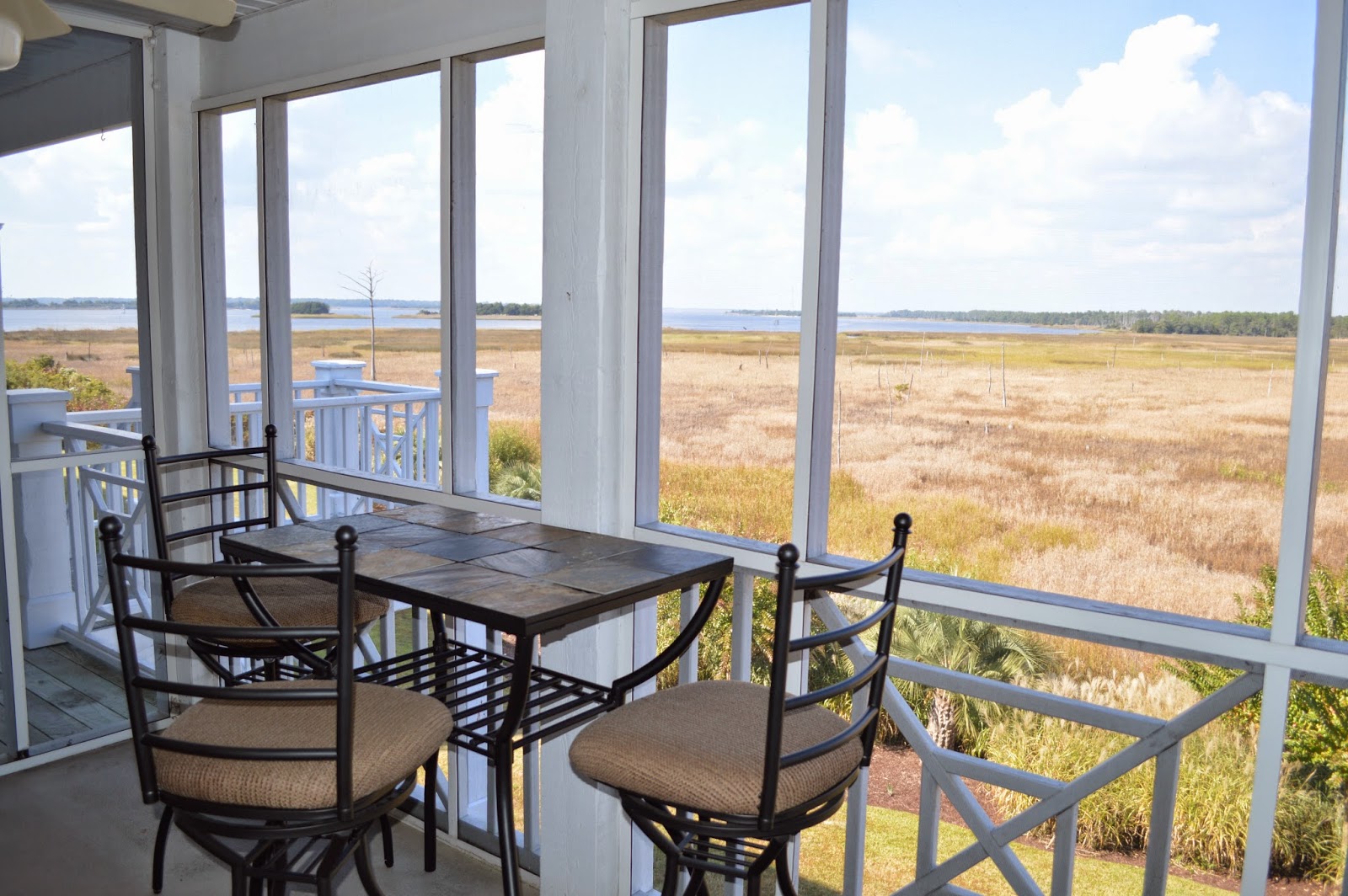
It's been awhile since I did an open house.   That's because my days (and nights) have been chock-a-block full showing homes and writing up contracts lately!  (Yeah! That's the kind of busy I love!)  But I've missed doing open houses.  Some agents are about as fond of open houses as a trip to the dentist, but I think they're fun and a great way to meet new clients, as well as help the seller, of course.  (Some day soon I'll write a blog about the good, the bad, and the ugly of open houses.) So, this weekend I'm thrilled to be able to host an open house at the gorgeous Turtle Cay condos.  These homes are just south of Wilmington NC, off of River Road, and have views to die for across the marshes to the Cape Fear River.  I could sit on this condo's balcony for hours and watch the birdlife and passing river traffic.   I expect, however, I'll be too busy with visitors to the open house to spend much time gazing through my binoculars this Sunday -- but I promise to let you borrow them if you come join us Sunday!   Here's my ad for the Open House:
      

OPEN HOUSE! 

Spectacular views of the Cape Fear River! 

104 Turtle Cay #10, Wilmington NC   
1-4 p.m. Sunday, July 27.

I'm bringing my birdwatching binoculars!  Come join me at my open house this Sunday afternoon in this lovely, renovated condo in the serene Turtle Cay community along the Cape Fear River.  Tastefully renovated with quality workmanship, this is a 2 bedroom condo that could easily have a 3rd bedroom. It has tray ceilings, a fireplace, new stainless steel appliances, tiled foyer, new flooring and paint. The views are to die for! Just a short 10 minute drive to Wilmington or a 5 minute drive to the beach. Only $164,900. Oh, by the way... This building is not in the flood plain, which will translate to lower costs for the owner.   See you there Sunday!


Saturday, July 5, 2014

June Real Estate News for the Wilmington NC Area

I've been crunching numbers again, folks, and here's what happened in June 2014 in the Wilmington area real estate market.  If you are planning on buying or selling a home, this is information you need!    

First of all, there's really excellent news for home buyers!  Mortgage rates are lower now than they were at this time last year!  This has come as a surprise to most lenders, who had predicted a steady rise.   (They are still saying it will soon start rising, of course.)  But for now, Freddie Mac's latest Primary Mortgage Market Survey says rates on 30-year fixed-rate is 4.12 percent with an average point of .05.    Last June, rates were 4.29 percent.

The good news for Sellers -- at least in New Hanover County:  The average price of sold homes in New Hanover continued a steady rise in prices -- March $247K, April $255, May $277K and  June $285k.  News is not so cheery in Pender and Brunswick counties (unless you're a buyer!), where average prices have stayed static or fallen slightly.   I believe one reason prices are rising faster in New Hanover is that the inventory is tighter, especially in the under $250k price range.  Market forces being what they are, less supply to meet demand means higher prices.  (see details about the Monthly Inventory Supply below.)   Thanks to a stronger stock market, sales in the New Hanover high-end homes and vacation properties has also pushed up the price averages.

Comparing traditional home sales (excluding the foreclosures and short sales), more homes were sold this year in June over last year at this time by 10%.  I also like to look at what's happening with foreclosures and short sales -- and it's clear the trend toward a normalizing real estate market is continuing:  Foreclosures in June 2014 are down almost 33% compared to June 2013, and short sales are down 45%.

Number of homes sold in the greater Wilmington area dropped a little between May and June, by 3.6%  (Historically, sold homes almost always take a dip in June -- not sure why!  maybe because kids are just out of school and families take vacation?)   As would be expected with these June sales figures, the "pending sales" (sales under contract but which would typically be expected to close within 60 days) were down significantly in May.  The good news is that pending sales in June were on a definite upswing (in May, 385; in June 423), which points to stronger sales in July.

Finally, let's take a look at the "Months Supply of Inventory" (MSI) in the greater Wilmington area.  As of June, the MSI was 6.96.  What does that mean? The MSI is an estimate of how long it will take for all the market's homes to be sold (or absorbed) based on how many homes are currently on the market and the rate homes have sold in the past (absorption rate).   MSI is simply used to compare the size of an inventory to the rate of sale. This is a great indicator of how balanced a market is.    Conventional wisdom says a balanced market has a monthly inventory of 5-7 months.  Less than 5 months supply means more competition among buyers, and is a seller's market; more than 7 months means an abundance of homes to choose from, and is a buyer's market.

MSI of 6.9 looks pretty balanced, although just on the cusp of being a Buyer's Market.  However, to get a better picture of the local market, it helps to break down the inventory by price range.  That tells us, across the greater Wilmington area, homes under $150K have an MSI of 5.4.   And, also looking at specific locales, in New Hanover County, homes in this price range have an MSI of 3.9 months; for homes between $150k and $250k, the MSI is 4.2!  That's well into Seller's Market territory.   It's tougher for home buyers in this price range to find a home, and may be more difficult to negotiate the price.  On the other end of the spectrum, the MSI for higher-end homes is still firmly in the Buyer's Market range, although the MSI has been dropping dramatically.  More high-end homes are selling, and they are selling faster than in previous months.

Here's a breakdown of MSI stats.  (note:  The most recent data is from May figures since I don't have all the MSI data for June yet.)

                                Apr      May     (May/New Hanover)
Under 150K             5.1       5.4            3.9
150k-250k                6.9       5.5            4.2
250k-350k                6.9       6.3            5.6
350k-450k               12.8      9.7            8.6
450k-550k               21.8     10.8           6.9
550k-1M                 22.2      17.4         11.9    

Hope you found this helpful.